OVERVIEW
Digitizing a High-Risk $90B Financial Workflow
Walmart’s internal financial teams processed $90B+ in wire transfers annually through manual email workflows, spreadsheets, and disconnected systems. The fragmented process created operational inefficiencies, compliance risk, and limited visibility across teams.
I led the UX strategy for designing a secure enterprise wire transfer portal that centralized request submission, approvals, and processing into a single platform. The system standardized workflows, introduced automated safeguards, and improved transparency for high-value financial transactions.
Within the first three quarters after launch:
$324K
Duplicate request prevention
BUSINESS CONTEXT
Financial Transactions Managed Through Manual Processes
Wire transfers are one of the most sensitive financial operations in the enterprise.
$90B+ in transfers moved through internal workflows annually
15,000+ transactions were processed each year
operations relied on manual emails, spreadsheets, and multiple tools
The lack of a unified system created compliance risk, operational inefficiency, and potential financial exposure.
The business needed a secure, auditable platform to standardize requests, reduce manual work, and protect high-value transactions.
LEGACY SYSTEM
Fragmented Tools and Unstandardized Forms Slowed Critical Operations
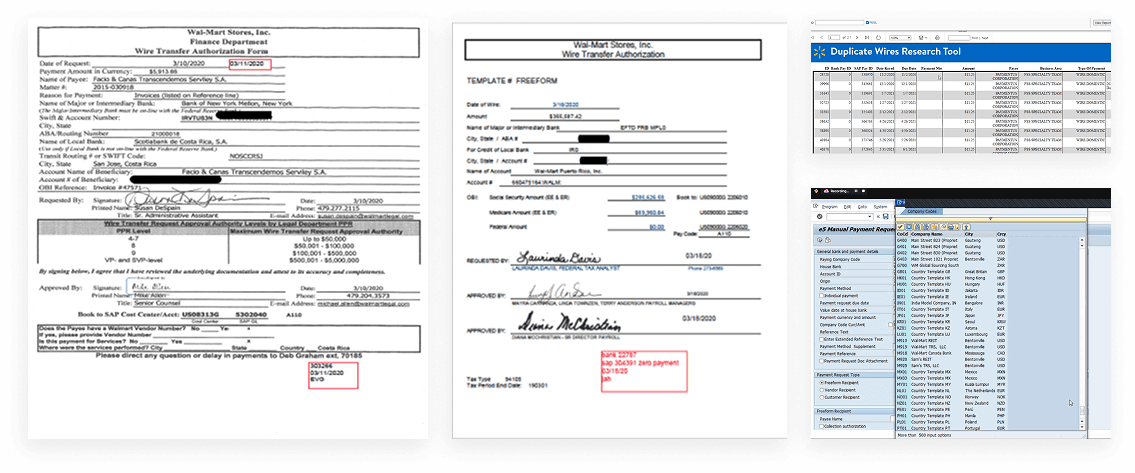
Before this project, the wire transfer process was highly fragmented.
Teams managed requests through:
10+ unstandardized forms
5+ disconnected systems
manual email coordination and document handling
The process lacked transparency and required significant manual effort from multiple roles including requestors, approvers, and processors.
As transaction volumes increased, the existing workflow could not scale safely.
LEADERSHIP CHALLENGE
Reframing a UI Request into an Enterprise Workflow Transformation
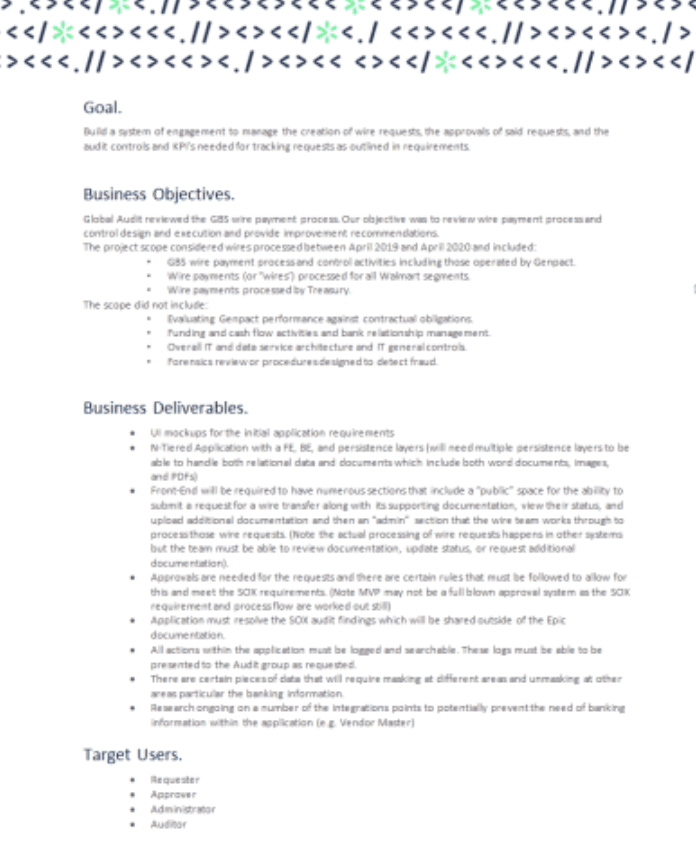
The product team initially requested UX support for interface design of a new application.
However, early analysis revealed the real issue was process fragmentation across the entire financial workflow.
As the Head of UX, I reframed the initiative as a service and systems design problem, aligning product, engineering, and financial teams around transforming the operational model—not just designing screens.
The goal was to create a single platform to manage the full lifecycle of wire transfers, from request to approval and processing.
STRATEGY
Aligning UX, Product, Engineering, and Financial Teams Around a Unified Operational Model
Rather than designing isolated screens, the strategy focused on re-architecting the operational workflow behind wire transfers.
Key strategic priorities included:
consolidating multiple forms into a single standardized request model
centralizing workflows into one secure platform
reducing financial risk through automation and validation rules
improving transparency across requestors, approvers, and processors
This approach positioned UX not just as a design function, but as a driver of operational transformation within the finance organization.
KEY FRAMEWORK
Using Service Design and System Mapping to Simplify a Complex Workflow
To understand the complexity of the system, we conducted research with internal users including:
10+ requestors
6+ approvers
12+ processors
Key issues included:
repetitive manual work
limited visibility into request status
heavy email coordination
high error risk from managing transactions across multiple systems
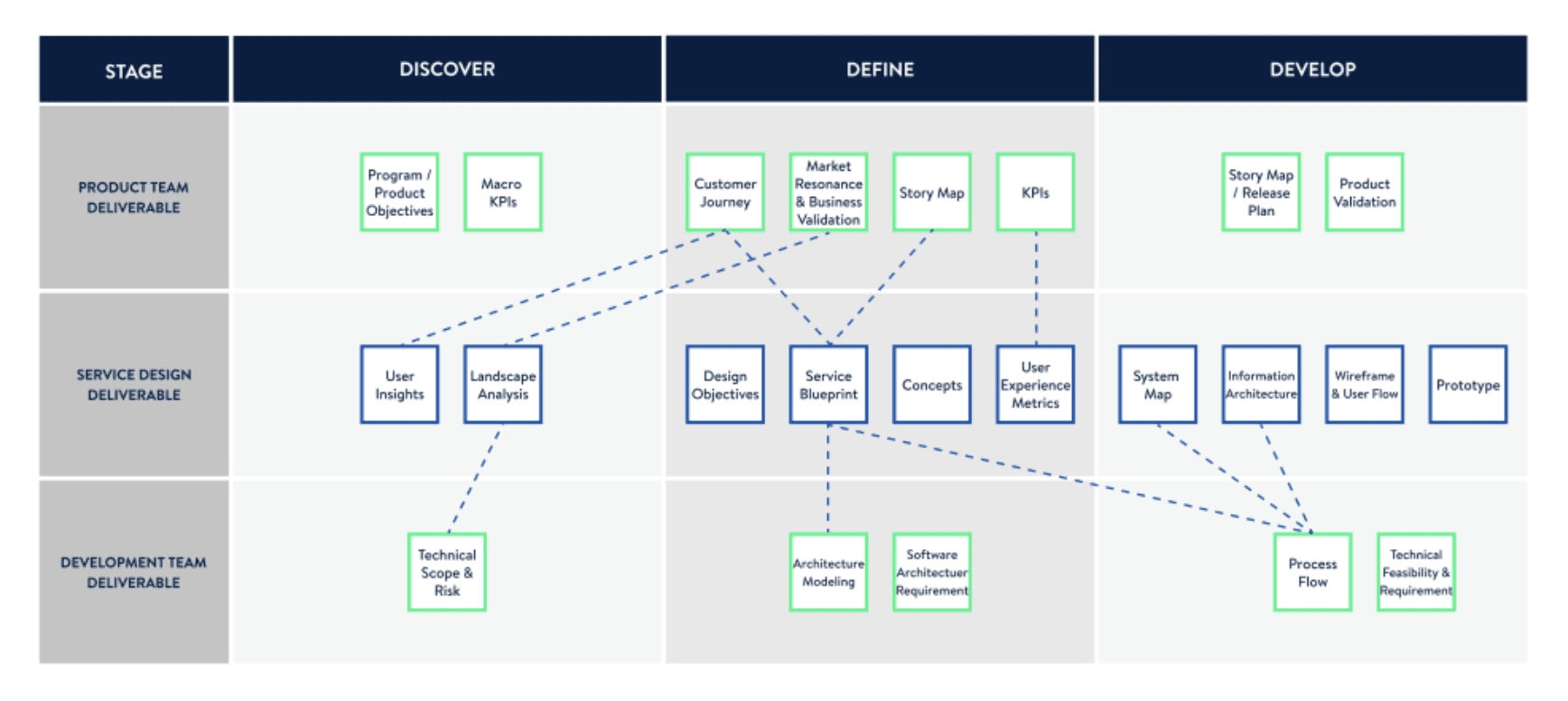
Using service design frameworks, the team mapped the workflow through:
task flow diagrams
service blueprints
system maps
user story mapping
These artifacts visualized the end-to-end lifecycle of a wire transfer request, helping stakeholders identify inefficiencies and align around a simplified system architecture.

Mapping the end-to-end flow
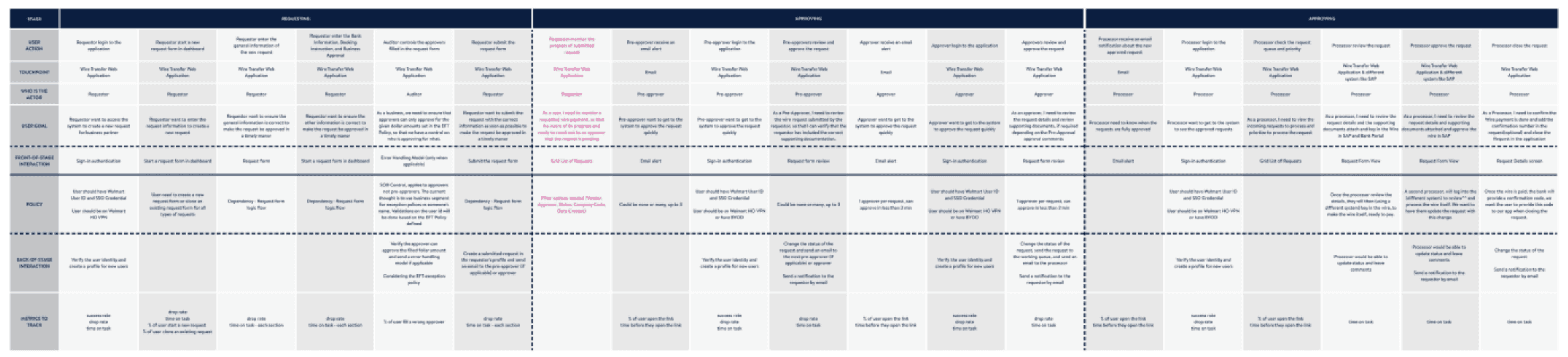
Identifying steps, touch points, and interactions throughout the workflow
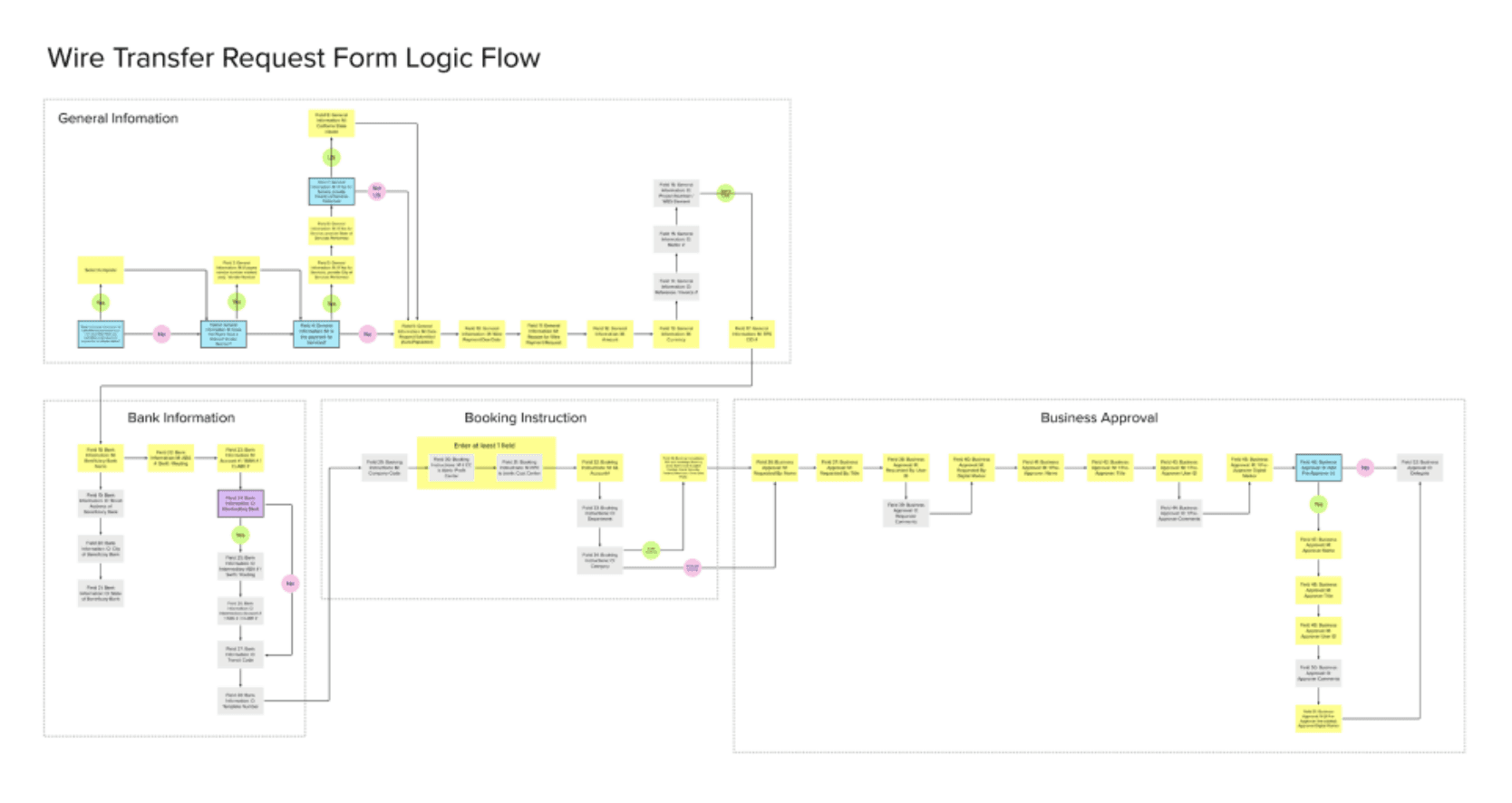
Structuring the request form to accommodate 10+ use cases
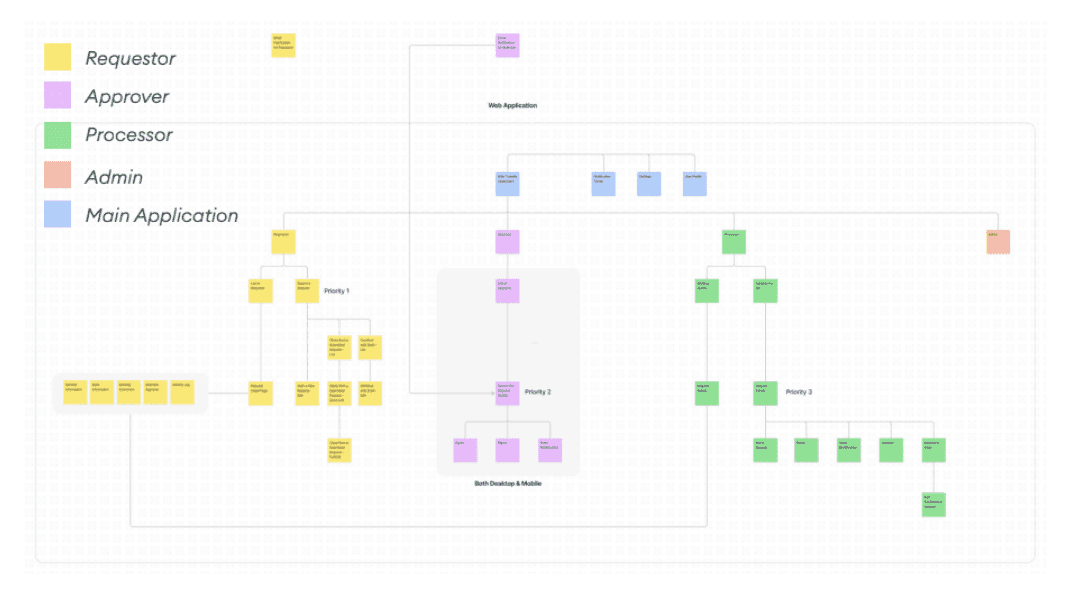
Building user stories into the information architecture
PLATFORM SOLUTION
A Unified Wire Transfer Portal Replaced Disconnected Tools and Manual Workflows
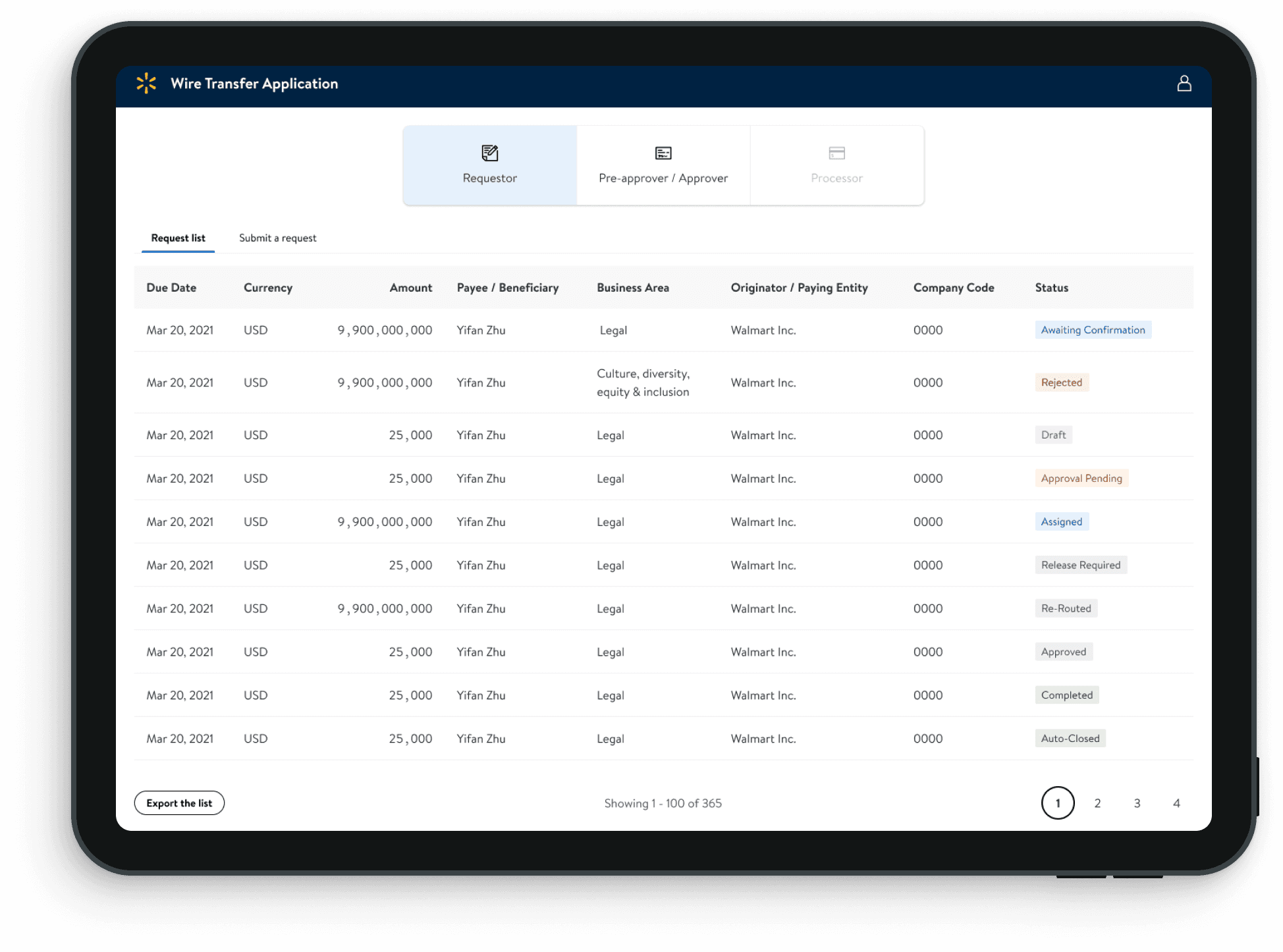
We designed and delivered a centralized wire transfer portal that unified the entire workflow.
Key capabilities included:
Standardized request forms: Replacing multiple legacy forms with a single structured request flow.
Role-based workflow: Supporting requestors, approvers, and processors within the same system.
Processor working queue: Allowing teams to manage high volumes of transfers and identify risks quickly.
Automated duplicate detection: Flagging potential duplicate payments based on transaction patterns.
Activity logs and request summaries: Providing transparency and auditability for financial operations.
The system also leveraged Walmart’s Living Design System, extending it to support internal enterprise tools.
Incorporating Walmart's Design System, Living Design, into the design process
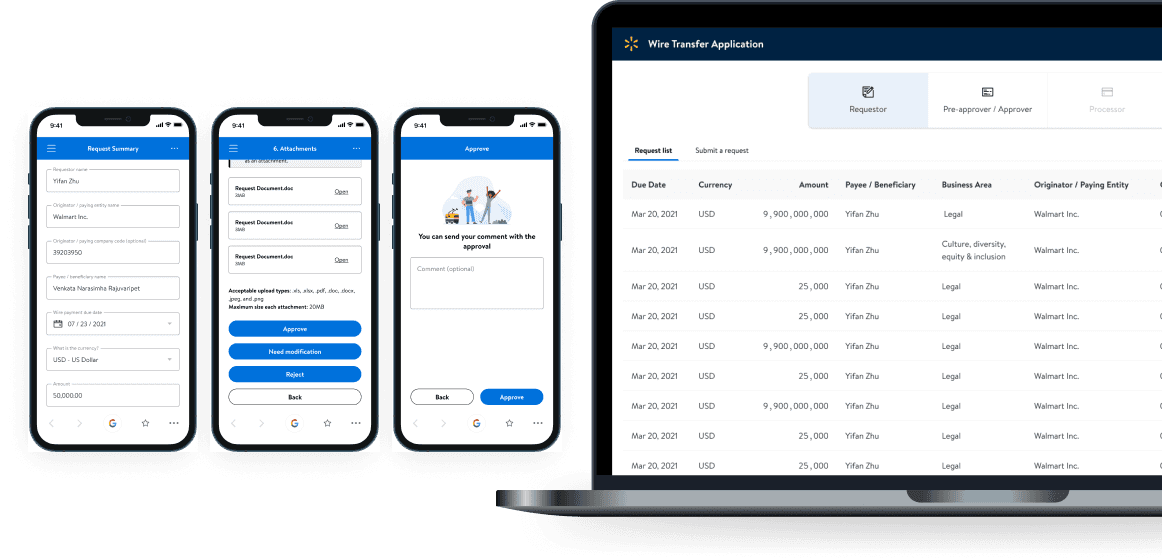
Delivering responsive designs
RESULTS
$49B in Transactions Processed and Duplicate Payments Prevented
The new wire transfer platform launched in 2023 and significantly improved operational efficiency and compliance.
Within the first three quarters after launch:
$49B in wire transfers processed
$324K in duplicate requests prevented
The platform also reduced manual coordination, improved visibility into request status, and created a secure, auditable workflow for high-value financial transactions.
The success of the initiative increased demand for UX collaboration across the organization, with plans to expand the platform to support 20+ additional payment workflows.
REFLECTION
What I Learned
This project reinforced several lessons about enterprise UX transformation.
Systems thinking is essential: Complex enterprise workflows require understanding the entire service ecosystem, not just individual interfaces.
Cross-functional alignment matters: Early alignment between product, engineering, and business teams ensured the platform addressed real operational needs.
UX can unlock organizational change: By reframing the work from UI design to service transformation, the UX team delivered meaningful business impact.