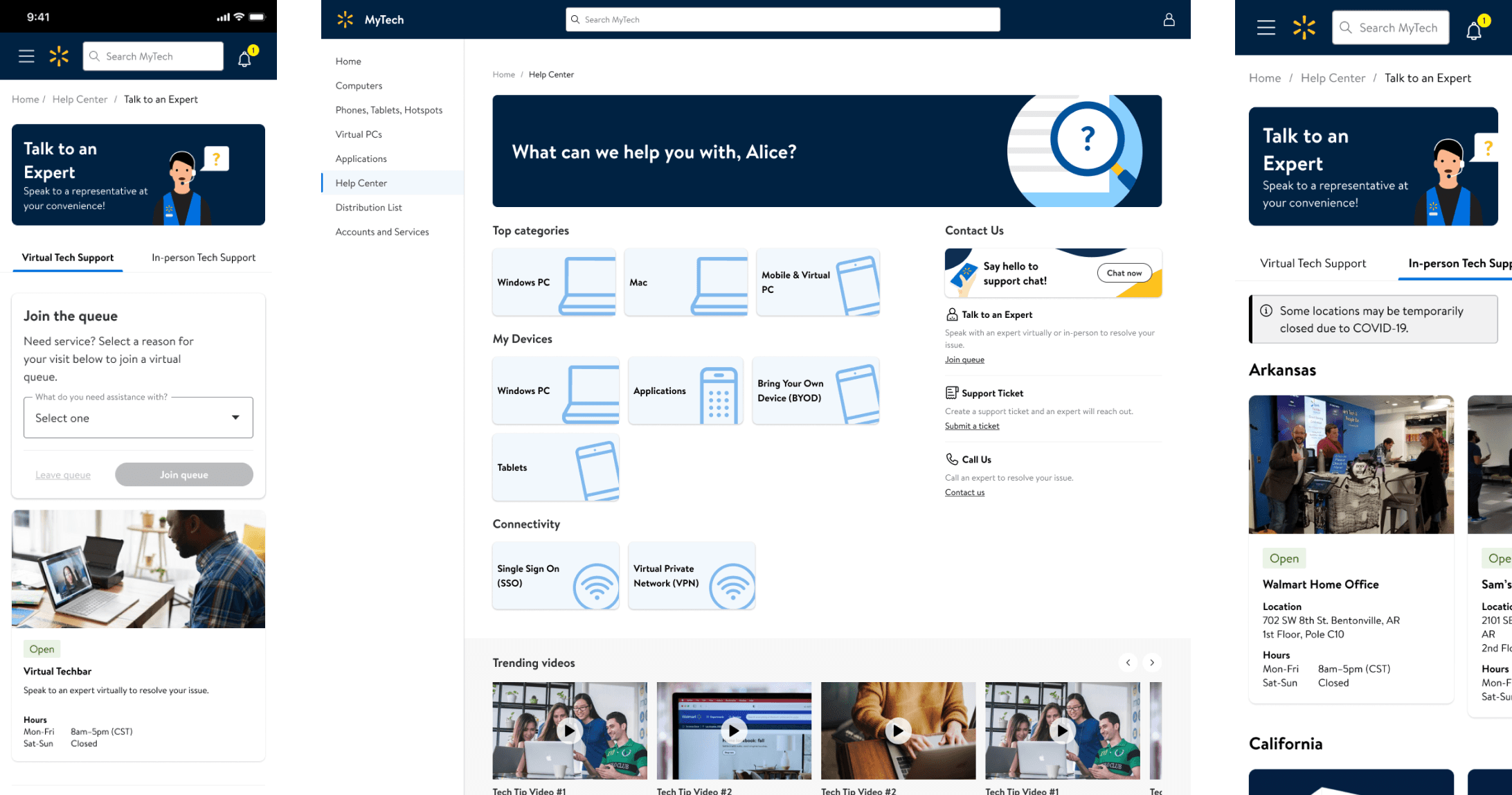
OVERVIEW
Transforming Enterprise Tech Support at Walmart
During COVID, Walmart’s enterprise tech support model faced significant strain. Associates could no longer rely on informal in-person help, and the existing support ecosystem was not designed for a distributed workforce. The challenge went beyond interface redesign and required rethinking enterprise support as a scalable product platform.
As support demand shifted, Tech Bar traffic dropped sharply while phone support became overwhelmed. Wait times increased, associates were blocked from work, and support teams lacked a clear way to guide users to the right help. The underlying ecosystem was fragmented across disconnected systems, making it difficult to know who had which devices, what software was assigned, where duplicate licenses existed, and how support demand moved through the organization.
Within the first year:
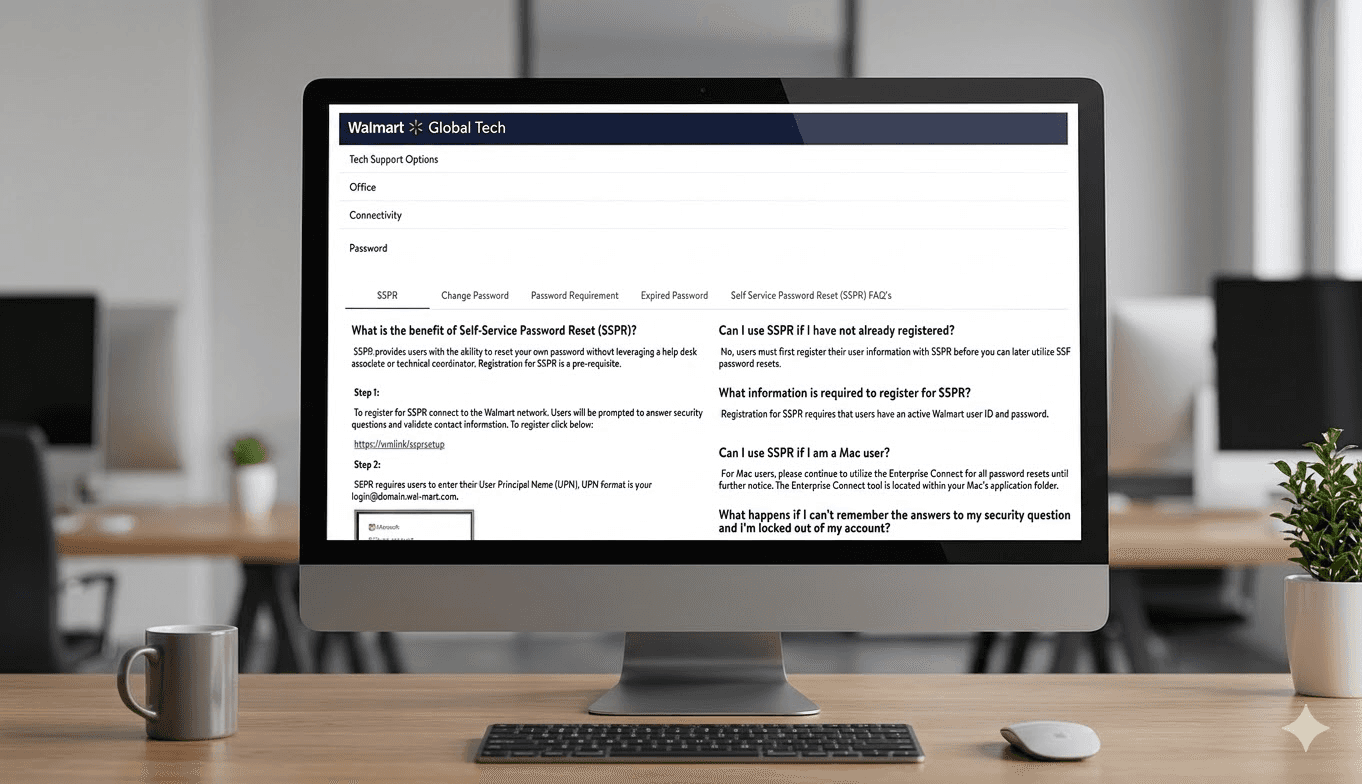
HIGH-LEVEL OBJECTIVES
Why This Mattered to the Business
Enterprise support inefficiency was more than a usability issue; it had direct operational and financial impacts.
When associates cannot resolve issues quickly, the cost compounds across lost productivity, increased ticket volume, duplicated support work, and growing frustration across the organization. Managers also lacked clear visibility into which team members had which devices, and the process for requesting software licenses was cumbersome, inconsistent, and sometimes duplicative. Because the systems did not connect with each other, there was no single source of truth across devices, requests, support activity, and entitlement.
Improving self-service support reduced operational costs, increased employee productivity, strengthened trust in internal platforms, and enabled a scalable support model for a distributed workforce.
SITUATION
COVID Exposed Structural Gaps in Enterprise Support
Many stakeholders did not realize how disjointed the experience had become until COVID made those gaps impossible to ignore. Associates moved across multiple support channels, outdated content, disconnected workflows, and inconsistent escalation paths. Tech Bar phone support was overloaded, wait times increased, and employees were often blocked from work while trying to find help.
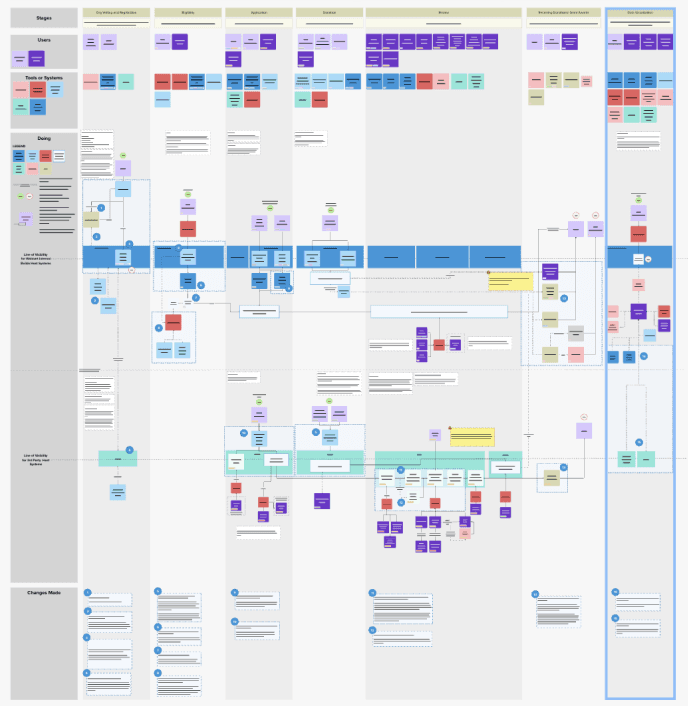
This made it critical to map the full service request experience end-to-end. Once the experience was visible, the scale of fragmentation became clear. The issue was not only that the interface needed improvement. The support model itself was broken across tools, teams, and systems.
MY ROLE
Leading UX Strategy for the Enterprise Support Platform
My role was to help the organization move beyond a portal redesign and rethink enterprise support as a scalable product system. The work required more than improving an interface. It meant aligning product, engineering, and support teams around a shared model for how enterprise support should operate at scale.
Design leadership
Cross-functional alignment
Research-driven problem framing
Support platform strategy
Experience architecture
I helped define the problem clearly, align stakeholders around measurable outcomes, and ensure UX had authority to shape both the experience and the operating model behind it.
OPERATIONAL REALITY
How Enterprise Tech Support Actually Worked
We mapped the full experience of requesting IT support and documented how associates moved across legacy portals, support phone lines, documentation, service categories, and escalation paths. This gave stakeholders a clear picture of how fragmented the experience was and why support demand was rising in the wrong places.
We combined ticket trend analysis, workflow audits, qualitative research, and sampled support cases to understand where users got stuck, why requests escalated unnecessarily, and how disconnected systems created friction for both associates and support teams.
This research revealed several structural problems. The support pathways were fragmented. The content was difficult to scan and search. Software requests were cumbersome and often lacked transparency. Device visibility was poor. Managers had limited insight into who had which devices, and some software requests resulted in redundant licensing costs because the systems did not connect well enough to provide a reliable shared view.
STRATEGY
Turning support into a product ecosystem
Instead of redesigning a single portal, we focused on improving the entire support model.
The strategy centered on five principles.
Self-service first
Clear service pathways
Search-driven discovery
Guided troubleshooting before escalation
Consistent support taxonomy across systems
This allowed teams to move away from reactive ticket-based support to a more scalable and discoverable support experience.
KEY FRAMEWORK
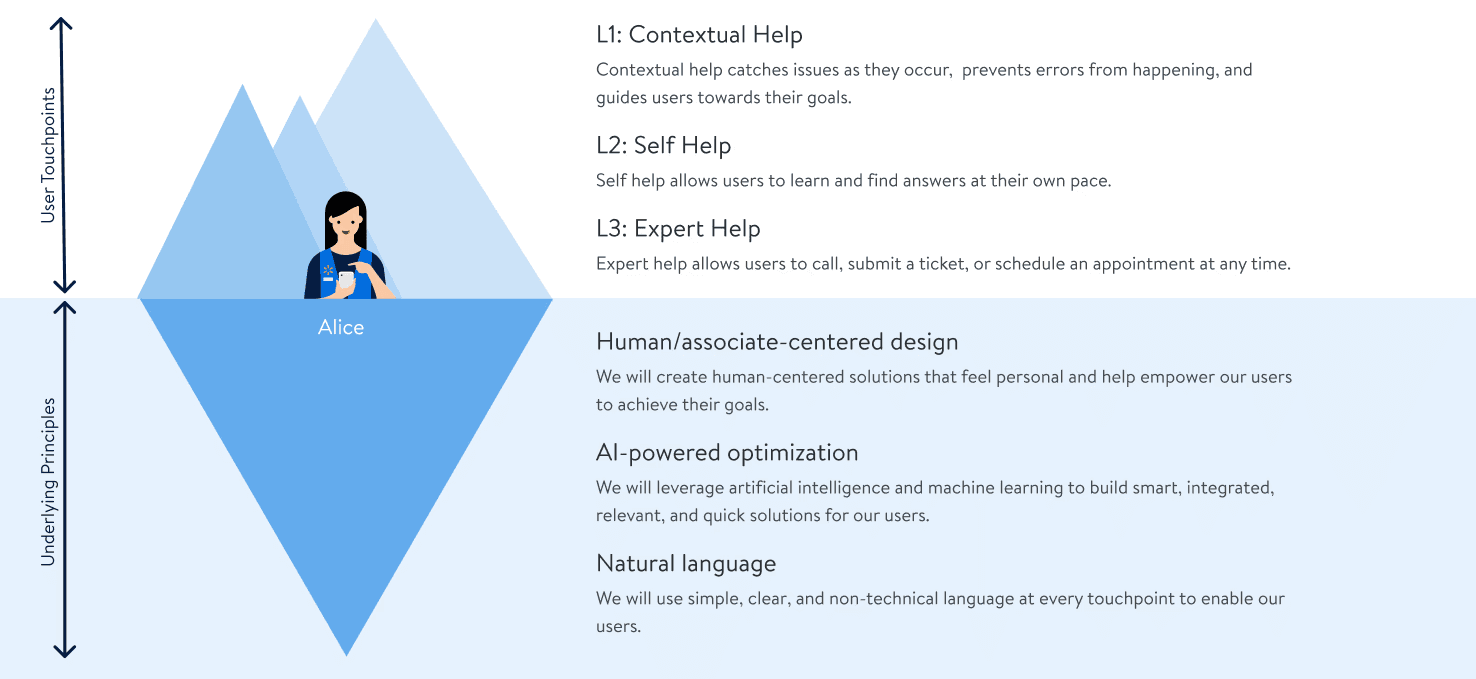
4 Levels of Help
We introduced a structured framework to guide teams in handling different types of support requests.
Level 0: Self-service knowledge and documentation
Level 1: Guided troubleshooting and workflows
Level 2: Assisted support with contextual routing
Level 3: Escalated specialist support
This framework helped teams prioritize work, clarify the right support path for each issue, and reduce unnecessary escalation.
COLLABORATION
Aligning Cross-Functional Teams Around a Shared Support Model
This work required aligning product, engineering, and support teams around a shared model for scalable enterprise support, not just improving the interface.
I helped drive that shift by embedding UX earlier in the decision-making process, creating a shared framework for support design and escalation, and aligning stakeholders around measurable outcomes instead of isolated requests. This reduced debate, improved prioritization, and gave teams a clearer model for how support should function across a distributed enterprise.
The work also required translating research into decisions that influenced structure, not just screens. That included how categories should be organized, when self-service should be prioritized, when guided support should take over, and when escalation was necessary.
SOLUTION
Designing a Clear Path from Problem to Resolution
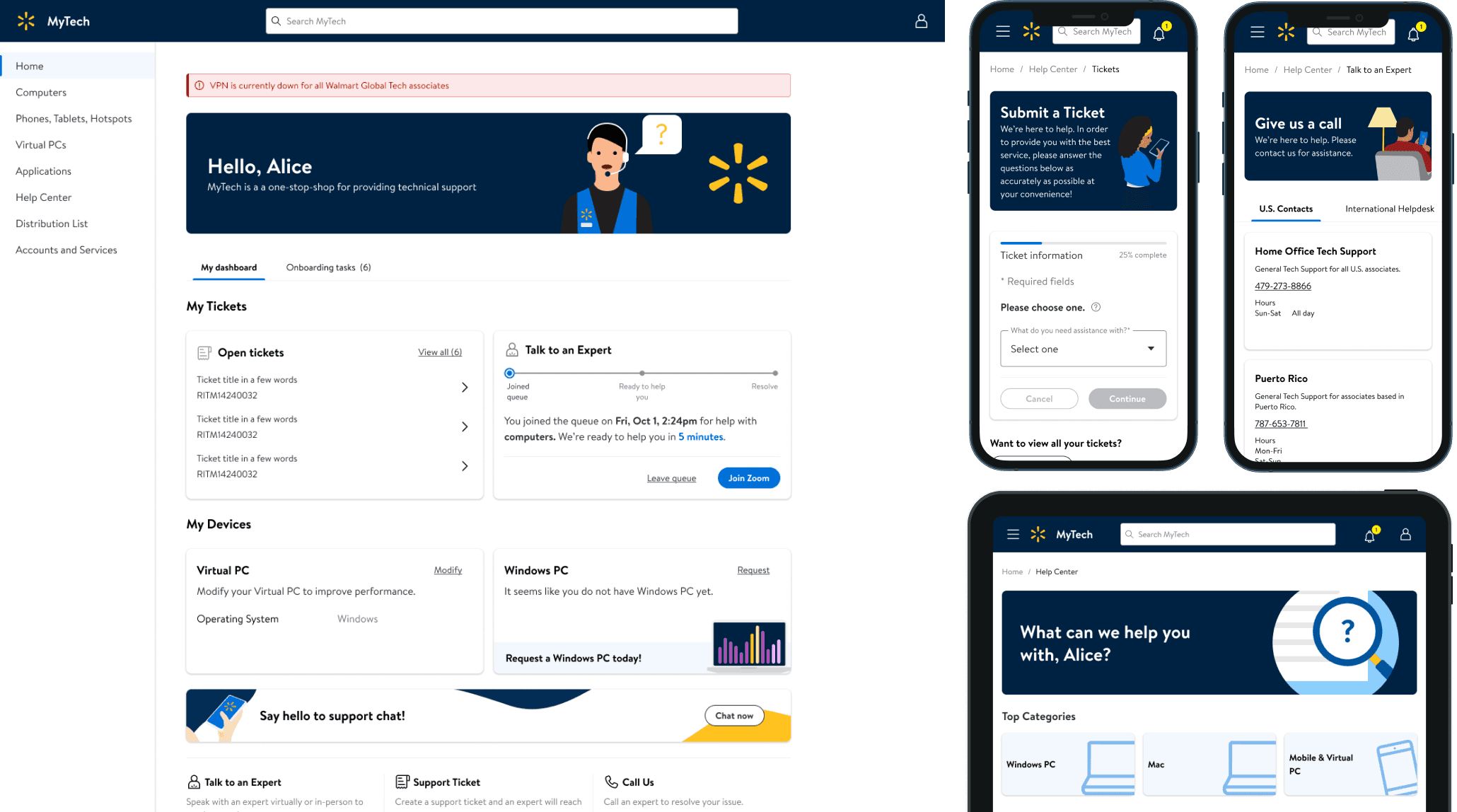
We simplified support pathways, improved content structure, prioritized search for discovery, and introduced guided support before escalation. The goal was to make the portal easier to use, reduce cognitive load, and create a more coherent support ecosystem.
The work also surfaced broader platform issues around devices, software requests, and system fragmentation. By clarifying the experience architecture and exposing gaps between systems, the project helped the organization move toward a model with stronger visibility and less duplication across support and provisioning workflows.
RESULTS
Built organizational credibility and measurable impact
REFLECTION
What I Learned
This work reinforced that enterprise support is not just a content or interface issue, but an ecosystem challenge shaped by workflows, system connections, ownership, taxonomy, and measurement.
The greatest opportunity was helping the organization view support as a product platform rather than a static help destination. Once the experience was clearly mapped and fragmentation was visible, it became easier to align teams and build a stronger foundation for scale.